
1060 vs 1095 vs T10: Which Katana Steel Should You Choose?
Open a few katana listings and you will often meet the same neat sales ladder: 1060 is “good,” 1095 is “better,” T10 is “premium,” and folded steel sits at the top. It is easy to remember. It is also a poor way to judge a finished sword.
If you are choosing your first katana, here is the useful short answer: buy the blade whose construction, heat treatment, dimensions and intended use are explained clearly. The steel name matters, but it should begin the conversation—not end it.
The 30-Second Answer
- Choose 1060 when you want a straightforward monosteel blade and the maker gives you better information about the finished sword than the competing listings do.
- Choose 1095 or T10 when you value a high-carbon blade, often with a genuine hamon, and the heat treatment is more than a marketing phrase.
- Choose folded or pattern-welded steel when the flowing surface pattern is part of what you want to own. Do not pay more because someone promises that “more layers” automatically means more strength.
- For a first cutting sword, predictable construction and honest specifications are usually worth more than an exotic material story.
What the Steel Names Actually Tell You
| Steel | Typical carbon range | What a buyer should know |
|---|---|---|
| 1060 | About 0.55–0.65% | A straightforward carbon steel that can make a dependable blade when it is heat-treated and assembled well |
| 1095 | About 0.90–1.03% | A higher-carbon steel often chosen for a hard edge and a clearly defined hamon |
| T10 | About 0.95–1.04% | A Chinese tool steel commonly used for clay-tempered blades; similar to 1095, but not identical |
| Folded / pattern-welded | Depends on the steels used | A method of forging layers together to create a visible pattern, rather than a steel grade of its own |
The ranges explain why 1095 and T10 are often compared, and why 1060 is usually treated as the more forgiving option. They do not tell you how well an individual sword was forged, hardened, polished or fitted. That is why we look at the complete sword rather than ranking it by one number.
1060: A Practical, Dependable Choice
The appeal of 1060 is not that it carries a secret formula. It is a familiar plain-carbon steel with less carbon than 1095. In an appropriate heat-treatment and blade design, it can make a dependable sword. What the name cannot tell you is whether this particular blade was treated appropriately or ground well.
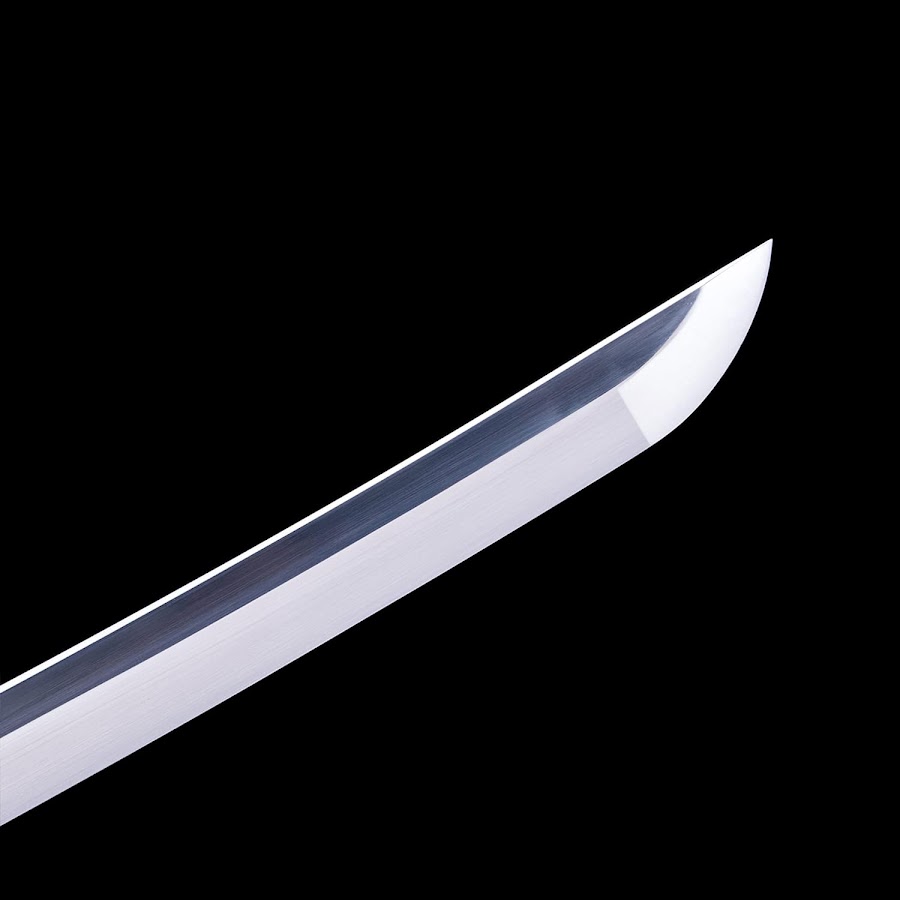
That distinction matters because buyers sometimes treat 1060 as the “beginner” option and feel pushed toward a more expensive label. We would compare the actual swords instead: edge condition, blade thickness and taper, total weight, point of balance, assembly and the maker's inspection record. A well-resolved 1060 sword does not become inferior because another listing has a larger number in its title.
1095 and T10: Close Enough to Compare, Not the Same
This is where forum shorthand causes trouble. T10 is regularly called “Chinese 1095.” Their carbon ranges overlap, so the comparison is understandable. But SAE 1095 and T10 belong to different standards and their complete chemistry limits are not identical. Calling them the same steel is convenient, not precise.
For a buyer, the difference between two finished swords is unlikely to be explained by those labels alone. How the blade is heated, quenched, tempered and shaped all affect the result. Two blades carrying the same steel name can therefore feel and perform very differently.
So how would we choose between them? If one sword has the dimensions you want, a better fitted tsuka and saya, a documented heat-treatment description and clear inspection photographs, that evidence is more persuasive than choosing T10 over 1095—or the other way around—by reputation alone.
A Hard Steel Is Not the Same as a Well-Hardened Sword
Hardness and hardenability are often mixed together. Hardness is a measured resistance to indentation. Hardenability is the depth to which a steel can harden under defined conditions. They are related, but they are not interchangeable—and neither one tells you by itself whether the finished sword is well balanced or securely assembled.
“60 HRC” looks reassuring in a product description, but it raises useful questions. Is that a target or an actual reading? Where on the blade was it measured? What range was accepted? A number without a method and location is not worthless, but it is not the complete story either.
Hamon: Beautiful, but Look Beyond the Photograph
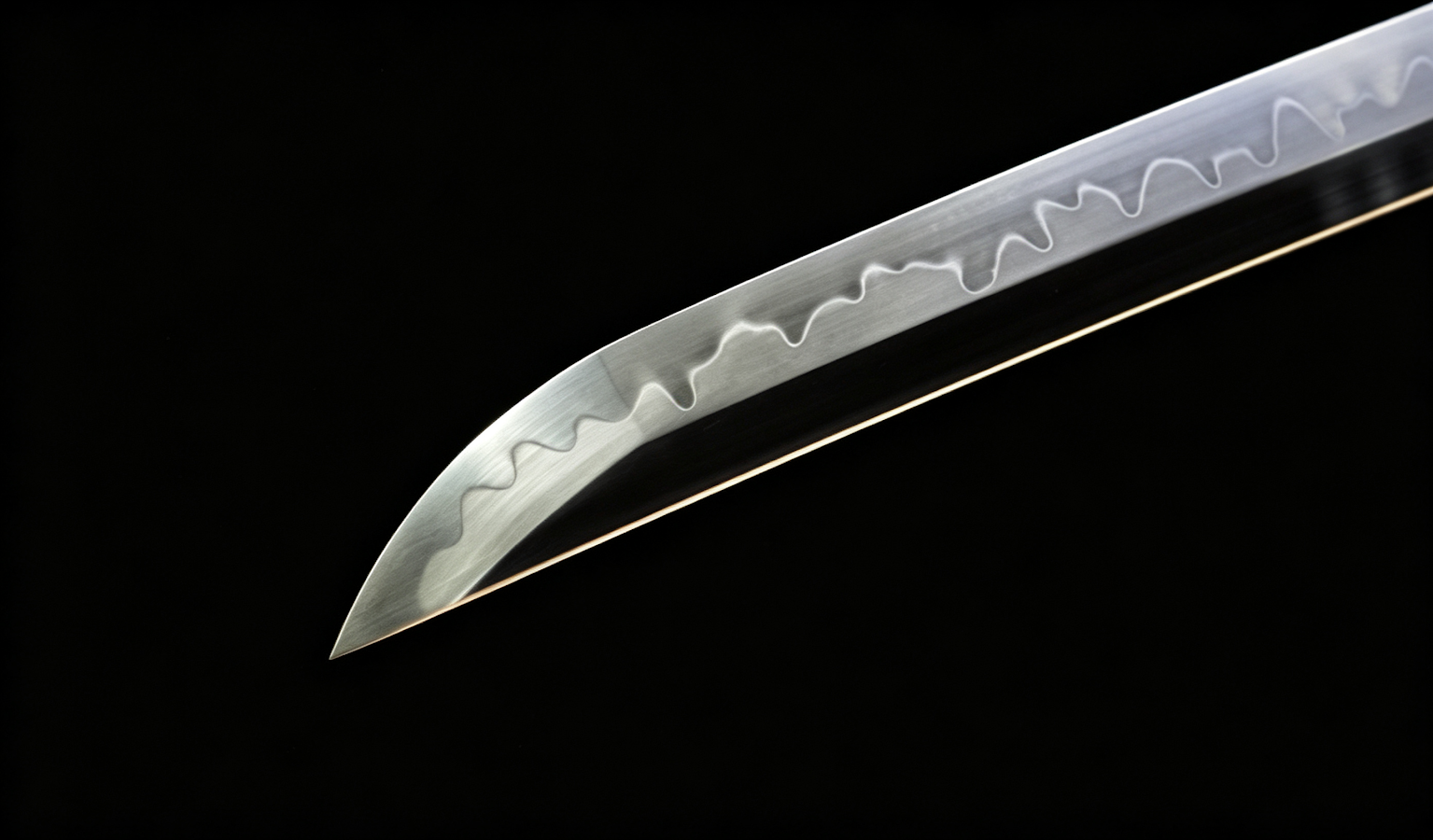
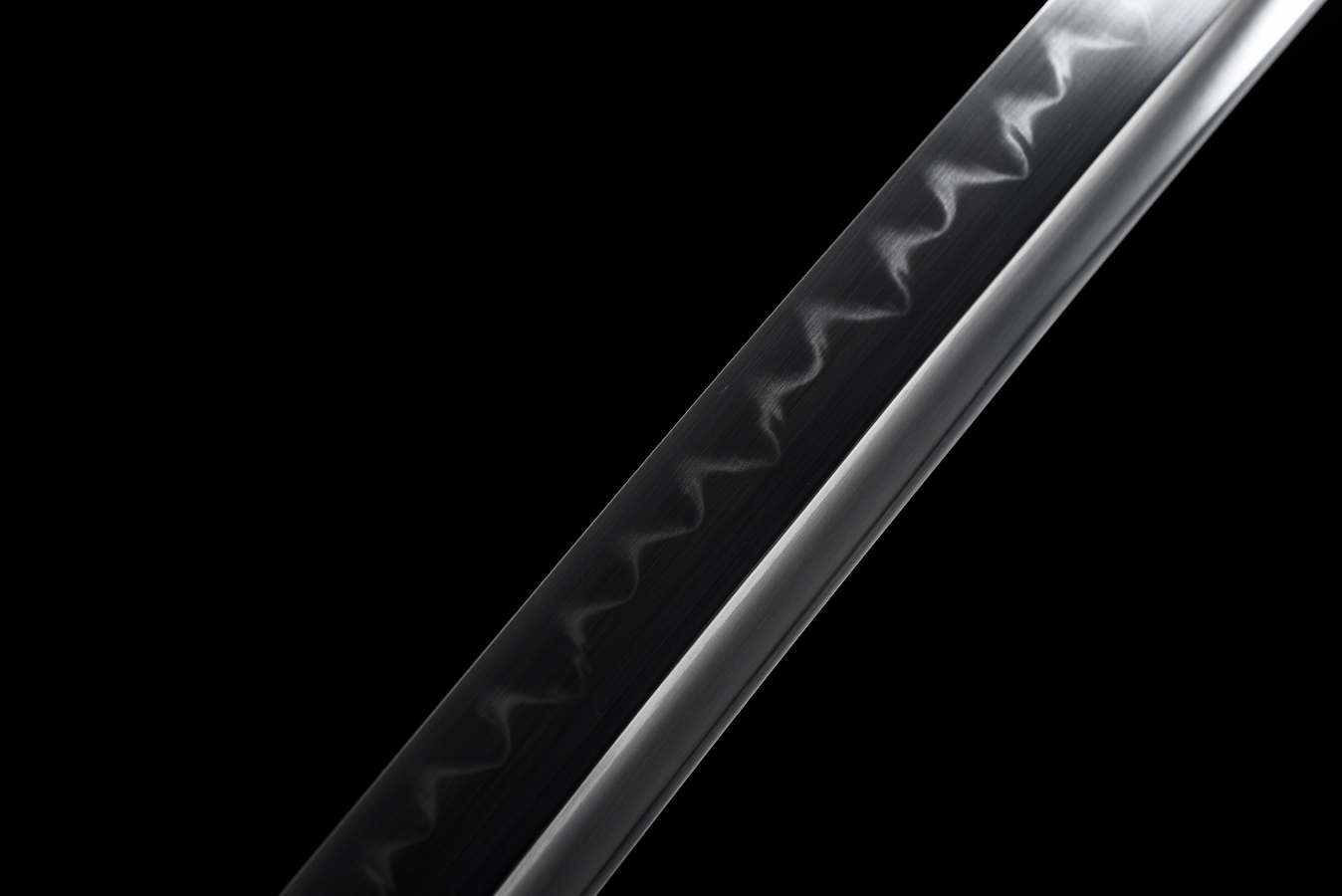
A well-finished hamon gives the blade much of its character. During clay tempering, the edge and the rest of the blade cool differently. Careful polishing then reveals the boundary created during hardening. In other words, a natural hamon comes from the blade-making process; it is not simply a pattern printed on the surface.
It is reasonable to choose a sword because you love that visual boundary. Just do not turn the photograph into evidence it cannot provide. Ask whether the hamon is natural, enhanced by etching or decorative, and whether the listed hardness is measured or only a workshop target.
Folded Steel: Choose the Pattern, Not the Myth
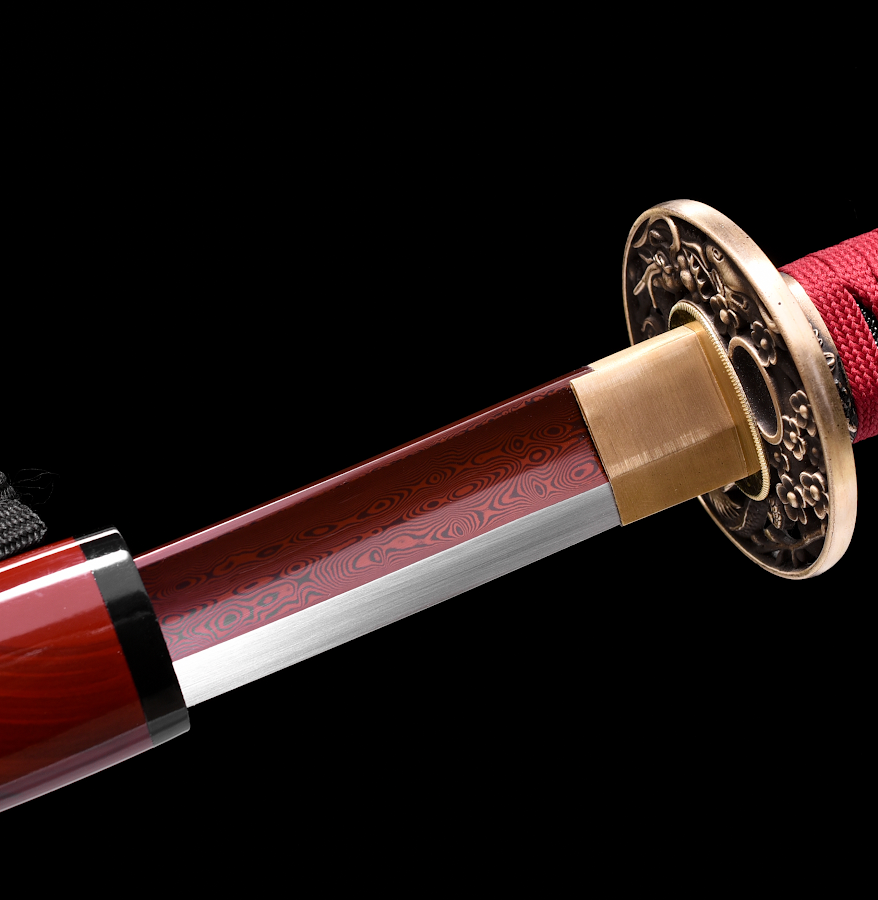
Pattern welding joins and manipulates iron or steel pieces so that polishing and etching reveal a flowing pattern. The result can be subtle, bold or highly decorative, depending on how the layers are arranged and finished. It is a forging style, not an automatic guarantee that the blade is stronger than a well-made monosteel sword.
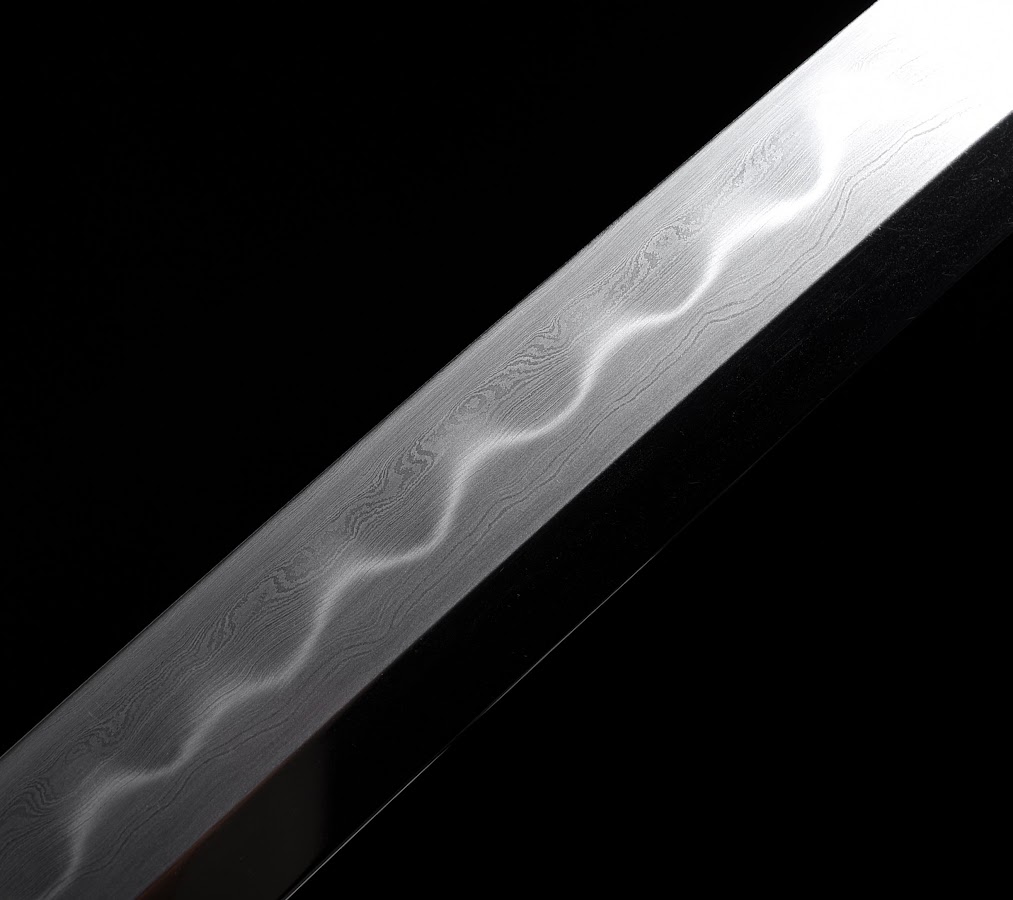
The pattern can be beautiful, and beauty is a legitimate reason to choose a sword. What we would not tell you is that a larger layer count automatically makes it tougher or sharper. How cleanly the layers are joined, how the blade is heat-treated and how its geometry is finished matter much more than a dramatic number in a product title.
Nor should folded steel be imagined as permanent alternating strips of “hard” and “soft” metal. Repeated heating and forging change the relationship between the layers. For a modern buyer, the visible pattern and the quality of the finished blade are the useful things to judge.
What Experienced Owners Notice After the Steel Question
We read enthusiast discussions because they reveal where buyers' attention moves after the first purchase. The same concerns return: a saya that retains the blade properly, a secure tsuka, sensible weight and balance, useful distal taper, honest photographs and a vendor willing to inspect the individual sword.
Experienced owners repeatedly make a practical point: heat treatment and the quality of the finished sword deserve more attention than steel prestige. A steel name cannot tell you whether the fittings move, the saya rattles or the sword feels too forward-heavy.
Once two choices come from a credible maker, the conversation usually moves to the tsuba, point of balance, hamon, handling and long-term care. Those are the details an owner continues to notice after the steel label has disappeared from view.
How to Choose a Blade You Will Still Like in a Year
- Decide what the sword is for. Collection, display and controlled cutting do not create the same priorities.
- Choose the look honestly. If the hamon or folded pattern is what draws you in, that is a better reason than invented strength claims.
- Read the measurements. Blade length alone does not tell you the weight, taper or point of balance.
- Separate claims from checks. Look for batch-specific material information, heat-treatment records and hardness measurements where they are promised.
- Ask about the finished sword. Fit, alignment, saya retention and inspection photographs concern the object you will actually receive.
When comparing BladeSummit pieces, open the product specification beside this guide. You can browse the catalogue by 1060, 1095, T10 or folded steel, then compare dimensions and construction instead of relying on the collection name alone.
Our Recommendation
There is no universal winner. Choose 1060 for a straightforward blade when the complete specification earns your confidence. Choose 1095 or T10 when the particular heat treatment, finish and geometry suit what you want. Choose folded steel because the pattern makes the sword more compelling to you.
The best label is the one backed by the best explanation of the finished sword. If a listing leaves an important detail unclear, ask us before ordering. A careful answer is more useful than another adjective added to the steel name.
Frequently Asked Questions
Is T10 better than 1095 for a katana?
Not on the name alone. T10 and SAE 1095 are different standards with overlapping carbon ranges. Heat treatment, geometry and quality control decide far more about the finished blade.
Is folded steel stronger than a single-steel blade?
There is no sound general rule that makes folded steel stronger. On a modern sword, choose it because you value the visible pattern and the work involved—not because a layer count promises better performance.
Is 1060 steel good for a first katana?
It can be. A well-made 1060 blade with clear heat-treatment information, sensible geometry and secure assembly is a more meaningful purchase than a higher-carbon label with vague specifications.
Does a hamon prove that a blade is differentially hardened?
A genuine hamon is associated with a hardened microstructural boundary, but a bright line in a listing photo is not proof by itself. Ask whether it is natural, enhanced by etching or purely decorative, and what process the seller documents.