About BladeSummit
BladeSummit is a direct sword manufacturer with its own workshop in Longquan, China. Since 2006, our workshop has focused on the making, fitting, assembly, and customization of Japanese-style swords and Chinese swords.
We are not simply a storefront purchasing finished swords from unrelated suppliers. Blade work, saya fitting, component selection, assembly, adjustment, and final inspection are coordinated through our own workshop team.
Our team includes a blade craftsman with 30 years of experience, a saya craftsman with 20 years of experience, and several craftsmen with more than ten years of experience in sword making, fitting, and assembly.
For us, a sword is not complete when the blade has been polished. The blade, habaki, seppa, tsuba, tsuka, fittings, and saya must work together as one complete assembly.
BladeSummit offers practical entry-level swords at accessible prices, made-to-order models with approved customization options, and advanced custom commissions for collectors with more demanding requirements.
Whether you are choosing your first katana or planning an individually specified sword, BladeSummit gives you direct access to a workshop that understands the complete sword—not only the blade.
Forging the Blade
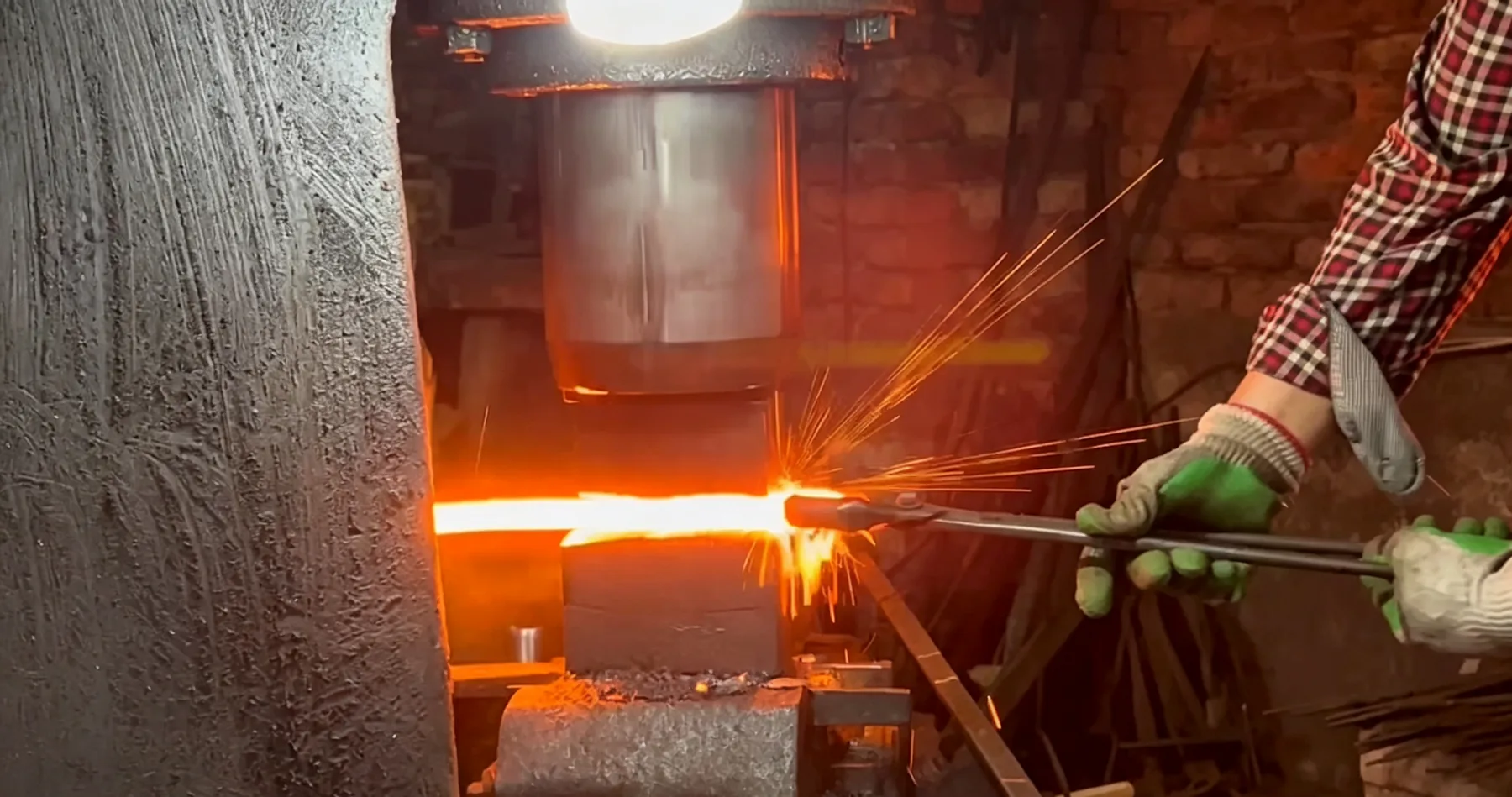
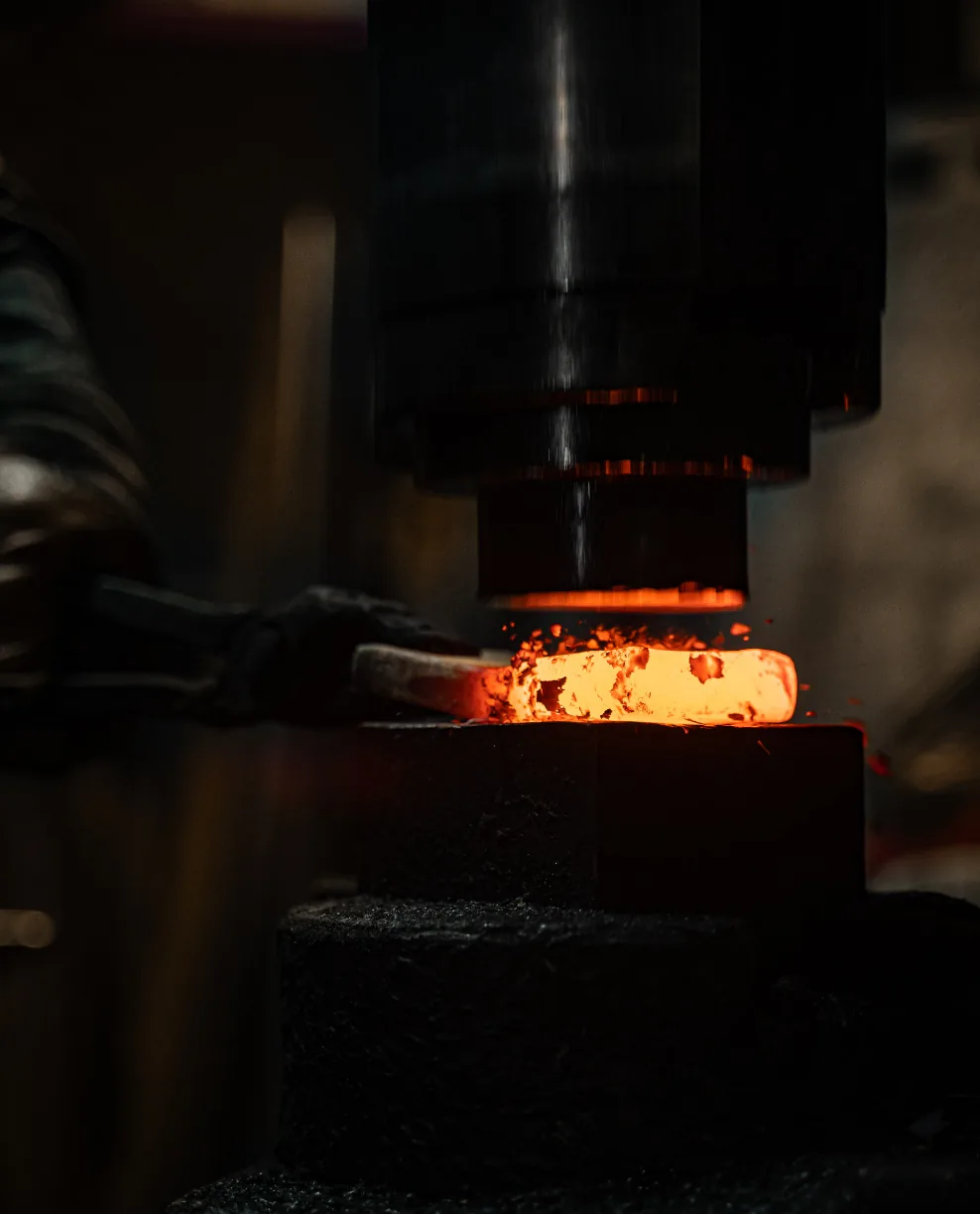
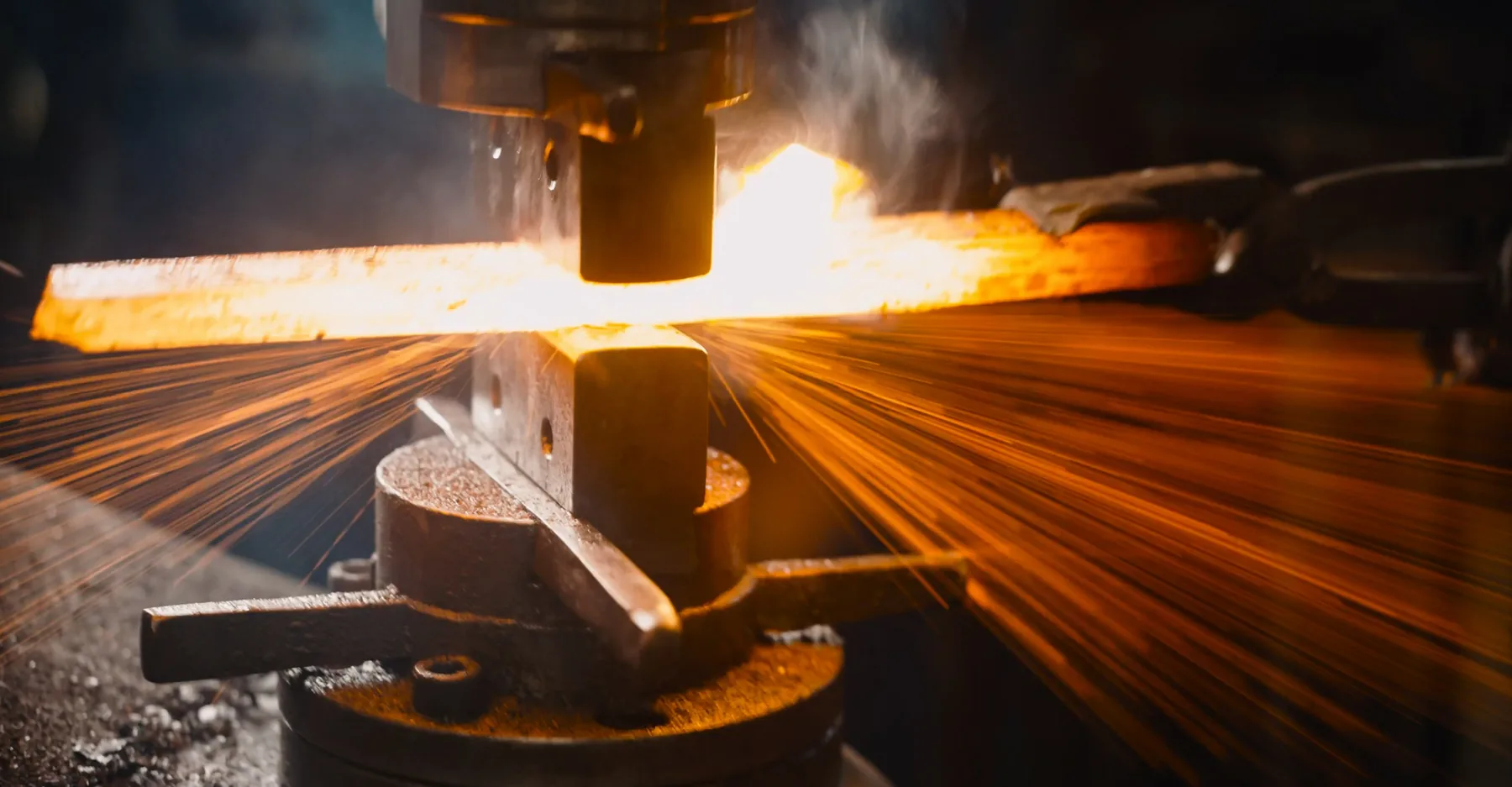
These photographs show heated steel being worked during the forging stage. Forging establishes the blade blank; shaping, heat treatment, polishing, fitting, assembly, and inspection follow as separate stages of the completed sword.
Built as One Complete Sword
At BladeSummit, assembly is not treated as a minor final step. It is where the blade, mountings, handle, and saya must come together correctly.
During fitting and final inspection, the workshop reviews:
- Habaki contact and seating
- Seppa and tsuba alignment
- Stability of the tsuba and fittings
- Tsuka alignment with the blade
- Handle retention and mekugi positioning
- Fuchi and kashira fit
- Saya mouth fit and blade retention
- Avoidable looseness or movement
- Overall alignment and proportion
Handmade components naturally have small variations. Our work is to select, adjust, and fit those components so the finished sword is stable, aligned, and visually coherent.
A sword with expensive decoration still requires correct assembly. At the same time, a simpler entry-level sword can provide excellent value when its blade, handle, fittings, and saya are fitted carefully.
Swords for Different Levels of Ownership
Entry-Level Swords
Our entry-level swords are intended for customers who want a properly assembled sword at an accessible price. Materials and decoration may be simpler, but the stated specifications, component stability, and basic alignment still receive workshop attention.
Made-to-Order Swords
Made-to-order swords allow customers to select from approved choices such as steel, edge condition, dimensions, handle wrapping, fittings, saya finish, and engraving. Compatibility is reviewed before production.
Advanced Custom Commissions
For experienced collectors and customers with more specific requirements, we can review advanced custom projects involving selected blade geometry, dimensions, steel, heat-treatment direction, fittings, saya construction, polishing, engraving, and overall visual coordination.
Advanced commissions are quoted individually because technical difficulty, materials, inspection requirements, and production time vary by project.